
Coastal Water Damage Experts
Structural Drying & Dehumidification Services in Palm Harbor, FL
Are you experiencing water in your home, basement, or crawl space due to flooding, leaks, or storm damage? When water enters your property, fast extraction is critical. Don’t worry, Coastal Restorations is here. Call now for immediate water extraction services.
Stabilizing Your Property Before Damage Sets In
Call (727) 558-4584 for Immediate Structural Drying Services
Excess moisture trapped inside walls, floors, and framing is one of the most serious threats to your Palm Harbor home or business. Even after visible water is removed, moisture continues migrating through porous materials. Within hours, insulation, drywall, and subfloors begin absorbing water. Within 24 hours, conditions are ideal for mold growth. Within 48 hours, warping, swelling, and structural weakening can occur.
The Difference Between
Water Removal and Structural Drying
Water removal eliminates standing or visible water. Structural drying goes further. It targets moisture that has penetrated building materials and cannot be seen without specialized equipment.
Using commercial-grade air movers, dehumidifiers, and moisture meters, structural drying professionals draw moisture out of walls, floors, ceilings, and structural components. This process is critical in preventing long-term damage and avoiding costly reconstruction.
Why Structural Drying Must Happen Fast
Many property owners assume that once surfaces feel dry, the problem is solved. In reality, trapped moisture continues causing damage behind walls and under flooring. Structural drying must begin immediately after extraction to stabilize the property, prevent mold growth, and preserve the integrity of the building.
When done correctly and promptly, structural drying can mean the difference between minor repairs and major structural loss.
What Is Structural Drying?
Structural drying is the science-based process of removing moisture from building materials and air using industrial equipment. This isn’t simply “airing out” a space. It’s a controlled environment where we manipulate temperature, humidity, and airflow to force water out of porous materials faster than mold can grow.
The Science Behind Drying
Water exists in materials in three forms:
- Free water: Liquid water on surfaces (removed during extraction)
- Capillary water: Water held in pores and between material fibers (requires air movement to evaporate)
- Bound water: Water chemically bonded to materials (requires heat and low humidity to release)
Professional drying removes all three types. Natural drying only removes type one.
Florida’s Unique Drying Challenges
80% Ambient Humidity Makes Natural Drying Impossible
Palm Harbor’s outdoor humidity averages 75-85% year-round. For materials to dry, the surrounding air must be drier than the materials themselves. When ambient humidity is 80%, water-damaged materials at 90% moisture have only a 10% gradient to dry—a process that would take months and still result in mold growth long before completion.
Temperature Accelerates Both Drying and Mold Growth
Florida’s average temperature of 75-80°F creates the perfect mold growing conditions. Mold thrives in temperatures above 70°F with humidity above 60%. After water damage, you have both. Professional drying drops humidity below 50% within hours, stopping mold before it starts.
Concrete Slab Foundations Are Moisture Traps
Most Palm Harbor homes sit on concrete slab foundations. Concrete is porous and absorbs water like a sponge—but it releases that water incredibly slowly. A saturated concrete slab can take 6-12 months to dry naturally in Florida’s humidity. With proper structural drying, we achieve this in 5-7 days.
Air Conditioning Systems Work Against Drying
Florida homeowners run AC constantly. Air conditioning cools air, which actually reduces its ability to hold moisture. Cold, damp air settles into water-damaged materials and slows evaporation. Our structural drying equipment overcomes this by generating constant air movement regardless of AC settings.
Our Structural Drying Process
Phase 1: Initial Moisture Assessment (Day 1)
Before placing any equipment, we map moisture throughout your property using:
Pin-Type Moisture Meters
We insert pins into materials (drywall, wood, subflooring) to measure internal moisture content. Normal readings are:
- Wood framing: 6-12% moisture content (MC)
- Drywall: 0-1% MC
- Concrete: 0-5% MC
Anything above these levels requires drying.
Non-Invasive Moisture Meters
These scan surfaces without causing damage, perfect for finished flooring, cabinets, and materials we want to preserve. They detect moisture up to 3/4 inch deep.
Thermal Imaging Cameras
Water shows up as cool spots on thermal images because evaporation creates temperature differences. We photograph your entire affected area to document hidden moisture behind walls, under floors, and in ceilings.
Psychrometric Data Collection
We measure temperature, relative humidity, and dew point in each affected room. These readings tell us exactly how much drying capacity we need to achieve proper conditions.
Phase 2: Equipment Placement Strategy (Day 1)
Based on moisture mapping, we create a drying plan:
Air Mover Placement
Air movers aren’t fans—they’re high-velocity air machines that create laminar airflow across wet surfaces. We place them:
- 6-12 inches from wet walls
- Angled to create airflow patterns that cover entire surfaces
- In combinations that create cyclonic patterns (air moving in controlled circles through rooms)
Typical drying requires 1 air mover per 100-200 square feet, more for severe saturation.
Dehumidifier Sizing and Placement
We calculate required dehumidification capacity using psychrometric formulas based on:
- Total affected square footage
- Moisture content of materials
- Ambient humidity levels
- Air exchange rate of the space
Under-sizing dehumidification is the #1 cause of drying failures. We always size equipment to handle worst-case scenarios.
Creating Containment Chambers
For severe water damage, we seal off affected areas with polyethylene sheeting. This creates controlled environments where we can maintain optimal drying conditions (low humidity, high air movement) without conditioning your entire home.
Phase 3: Active Drying (Days 2-5)
Equipment runs 24/7. Our technicians visit daily to:
Monitor Moisture Reduction
We re-measure moisture levels in the same locations every 24 hours. Proper drying shows:
- 20-40% moisture reduction in the first 24 hours
- Continued reduction every day until reaching dry standards
- No “plateaus” where moisture stops dropping (indicates hidden water sources)
Adjust Equipment
As materials dry, we reposition air movers to target remaining wet spots. We may add or remove dehumidifiers based on atmospheric readings.
Check for Secondary Damage
We inspect for signs of mold growth, structural swelling, or flooring delamination. Early detection allows us to address issues before they worsen.
Empty Dehumidifier Reservoirs
Commercial dehumidifiers can collect 10-20 gallons per day. We either empty onboard tanks or run continuous drain lines to prevent overflow.
Phase 4: Dry Standard Verification (Day 5-7)
Drying is complete when materials reach moisture content levels at or below pre-loss conditions. We verify this by:
- Taking final moisture readings in all previously wet areas
- Comparing to initial readings to confirm materials are dry
- Documenting completion with photos and moisture logs
Materials that can’t be dried to standard (swollen subfloors, delaminated cabinets, mold-contaminated drywall) get marked for replacement during reconstruction.
Industrial Drying Equipment We Use
LGR Dehumidifiers (Low Grain Refrigerant)
These are the workhorses of structural drying. LGR dehumidifiers can:
- Remove 80-150 pints of water per day
- Reduce humidity to 30-40% (well below mold growth threshold)
- Operate effectively in Florida’s warm temperatures
LGR units work by supercooling air to condense moisture, then reheating it before releasing it back into the room. This process is far more efficient than standard refrigerant dehumidifiers.
Desiccant Dehumidifiers
For specialty situations—crawl spaces, tightly sealed areas, or when we need to achieve humidity below 30%—we use desiccant dehumidifiers. These use silica gel to absorb moisture chemically rather than through refrigeration. They’re particularly effective in:
- Tight spaces where LGR units won’t fit
- Areas where we need extreme drying (under 25% RH)
- Cold environments where refrigerant systems lose efficiency
Axial Air Movers
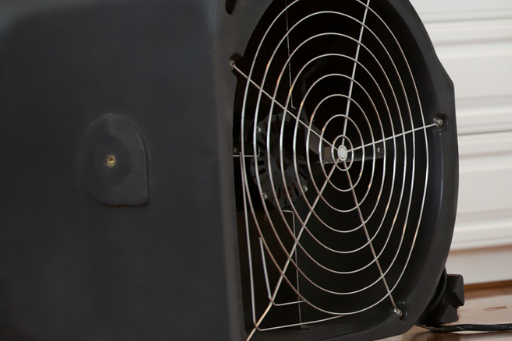
These are the blue cylindrical “fans” commonly seen at water damage sites. Don’t let the simple appearance fool you—these machines move 1,800-2,500 CFM (cubic feet per minute) while using minimal electricity. Features include:
- Three-speed motors for adjustable airflow
- Stackable design for efficient transport and storage
- Daisy-chain electrical connections
- Can run continuously for weeks without motor failure
Centrifugal Air Movers
For areas requiring focused, high-velocity airflow (wall cavities, under cabinets, crawl spaces), we use centrifugal air movers. These:
- Generate higher pressure than axial movers
- Work with ducting to direct air into tight spaces
- Can force air through small openings we drill in walls
- Create the airflow needed to dry inside wall cavities without full demolition
Injection Drying Systems
When walls are wet but still structurally sound, we use injection drying rather than tearing out drywall. This system:
- Attaches to walls via suction cups or straps
- Forces warm, dry air into wall cavities through small access holes
- Circulates air behind drywall, drying studs and insulation
- Preserves your walls, saving thousands in reconstruction costs
Negative Air Machines with HEPA Filtration
During drying, water evaporating from contaminated sources (sewage, storm surge) releases airborne particles and odors. Negative air machines:
- Filter air through HEPA filters (captures 99.97% of particles 0.3 microns or larger)
- Create negative pressure (air flows into contained areas, not out into clean areas)
- Eliminate musty odors caused by bacteria and organic materials
Common Structural Drying Scenarios in Palm Harbor
Drying After Burst Pipes
Clean water from burst supply lines saturates drywall, insulation, and framing. While the water is clean initially, mold can begin growing within 24 hours. Our drying process:
- Removes all standing water
- Places air movers along wet walls
- Runs dehumidifiers to maintain RH below 50%
- Typically achieves dry standards in 3-4 days
Hurricane and Storm Surge Drying
Storm water isn’t clean. It contains saltwater, sewage, chemicals, and biological contaminants. Drying storm-damaged properties requires:
- Removal of all contaminated materials (drywall, insulation, sometimes flooring)
- Antimicrobial treatment of all studs and framing
- Aggressive drying of structural components (studs, concrete)
- Extended drying times (5-7 days) because we’re drying just the structure
Salt in storm surge makes drying more complex. Salt is hygroscopic—it attracts and holds moisture from the air. Any salt residue left in materials will continually draw humidity, preventing true drying. We clean all surfaces before drying.
Air Conditioning Condensate Drying
AC overflow typically saturates ceilings and attic spaces. The challenge is drying what you can’t see:
- Water in attic insulation
- Wet ceiling drywall
- Moisture in ceiling joists
We often remove ceiling drywall to access these areas, then dry the structural components from above and below simultaneously.
Slab Leak Drying
Water leaking from pipes under concrete slabs creates unique drying challenges:
- Water wicks up through concrete into flooring
- Pressure builds under flooring materials
- Floor covering (tile, laminate, vinyl) prevents moisture escape
We remove flooring, drill small holes in the concrete if needed, and use specialized concrete drying mats that pull moisture directly from slabs.
How Long Does Structural Drying Take?
Standard Timeframes by Scenario
- Light water damage (one room, minimal saturation): 2-3 days
- Moderate water damage (multiple rooms, walls wet to 2 feet high): 3-5 days
- Severe water damage (whole-house flooding, walls wet floor to ceiling): 5-7 days
- Concrete slab saturation: 5-10 days
- Storm surge / Category 3 water (after demolition of contaminated materials): 7-10 days
Factors That Extend Drying Time
- High ambient humidity: When outdoor humidity exceeds 85%, drying takes longer
- Poor ventilation: Homes sealed tightly for energy efficiency dry slower
- Dense materials: Plaster walls, brick, and hardwoods take longer than drywall and pine
- Hidden water: Water trapped in inaccessible areas (closed wall cavities, under cabinets) requires more time
- Ongoing water intrusion: If roof leaks or plumbing continues introducing water, drying can’t complete
Why Rushing Drying Causes Problems
Some companies remove equipment after 2-3 days regardless of moisture readings. This leaves materials at elevated moisture content, guaranteeing mold growth within weeks. We don’t remove equipment until moisture readings confirm materials are dry to standard.
The Cost of Structural Drying in Palm Harbor (2026)
Equipment Rental vs. Restoration Company
Some homeowners consider renting equipment themselves:
Equipment Rental Costs (DIY):
- Air mover rental: $40-60/day each (need 4-6 for typical home)
- Dehumidifier rental: $70-100/day each (need 2-3 for typical home)
- Moisture meter purchase: $100-500
- Total DIY cost for 5 days: $2,000-3,500
Professional Restoration Includes:
- All equipment
- Daily monitoring and adjustments
- Expertise in optimal equipment placement
- Insurance documentation and coordination
- Guarantee of dry standards
- Typical cost: $2,500-4,500
The professional service costs slightly more but includes expertise that makes success far more likely.
Insurance Coverage
Structural drying is almost always covered when:
- Water damage is from a covered peril (burst pipes, storm damage, appliance failure)
- You call for services within a reasonable time (don’t wait weeks)
- Drying is necessary to prevent further damage
Flood insurance through NFIP covers drying after flood events.
Why Natural Drying Fails in Florida
The Humidity Problem
For water to evaporate from materials, it must evaporate into air that’s drier than the material. When Palm Harbor’s outdoor humidity is 80% and your wet drywall is 90% moisture content, there’s only a 10-point gradient. Evaporation at this rate is glacially slow—measured in weeks or months, not days.
The Mold Timeline
Mold spores are everywhere. They’re in the air, on surfaces, waiting for moisture. Once materials exceed 60% moisture content:
- 24-48 hours: Spores begin germinating
- 3-5 days: Visible mold colonies form
- 7 days: Mold is established throughout materials
Natural drying in Florida takes weeks. Mold starts in days. The math doesn’t work.
The Temperature Factor
Water evaporates faster at higher temperatures. But Florida’s warm temperatures also accelerate mold growth. You’re in a race between drying and mold—and mold usually wins without mechanical drying assistance.
Air Movement Is Non-Negotiable
Opening windows and running ceiling fans creates minimal airflow across wet surfaces. Our air movers generate airflow 20-30 times faster than ceiling fans, creating the evaporation rates needed to stay ahead of mold.
Structural Drying vs. Air Conditioning
Why AC Doesn’t Dry Water-Damaged Homes
Many homeowners assume their air conditioning will help dry their home. The opposite is often true.
AC systems:
- Cool air (reduces its capacity to hold moisture)
- Remove some moisture (but only from the air, not from materials)
- Create cold spots where moisture condenses
- Can’t generate the airflow needed for evaporation
AC systems are designed for comfort cooling, not structural drying. They’ll remove some atmospheric moisture but can’t force moisture out of saturated materials.
The Ideal Drying Conditions
Optimal drying requires:
- High air temperature (75-85°F)
- Low relative humidity (below 50%)
- High air movement across wet surfaces (1,800+ CFM per air mover)
We achieve this with industrial dehumidifiers (low RH), air movers (high air movement), and by allowing spaces to warm naturally or supplementing with heat if needed.
Monitoring Drying Progress: What We Track
Daily Moisture Readings
We document:
- Moisture content of affected materials
- Percentage of reduction from previous day
- Expected dry date based on current progress
This data confirms our drying strategy is working and provides insurance companies with evidence of proper restoration.
Atmospheric Readings
Three times daily, we record:
- Temperature
- Relative humidity
- Dew point
If relative humidity starts climbing or dew point approaches temperature, we adjust dehumidifier output or add units.
Visual Inspections
We look for:
- Signs of mold growth (musty odors, visible colonies)
- Buckling or swelling in materials
- Dehumidifier overflow or equipment malfunction
- Proper air mover positioning (can shift during cleaning or occupant activity)